

Piperacillin–Tazobactam–Associated Refractory High–Anion Gap Metabolic Acidosis in Septic Shock: A Case Report
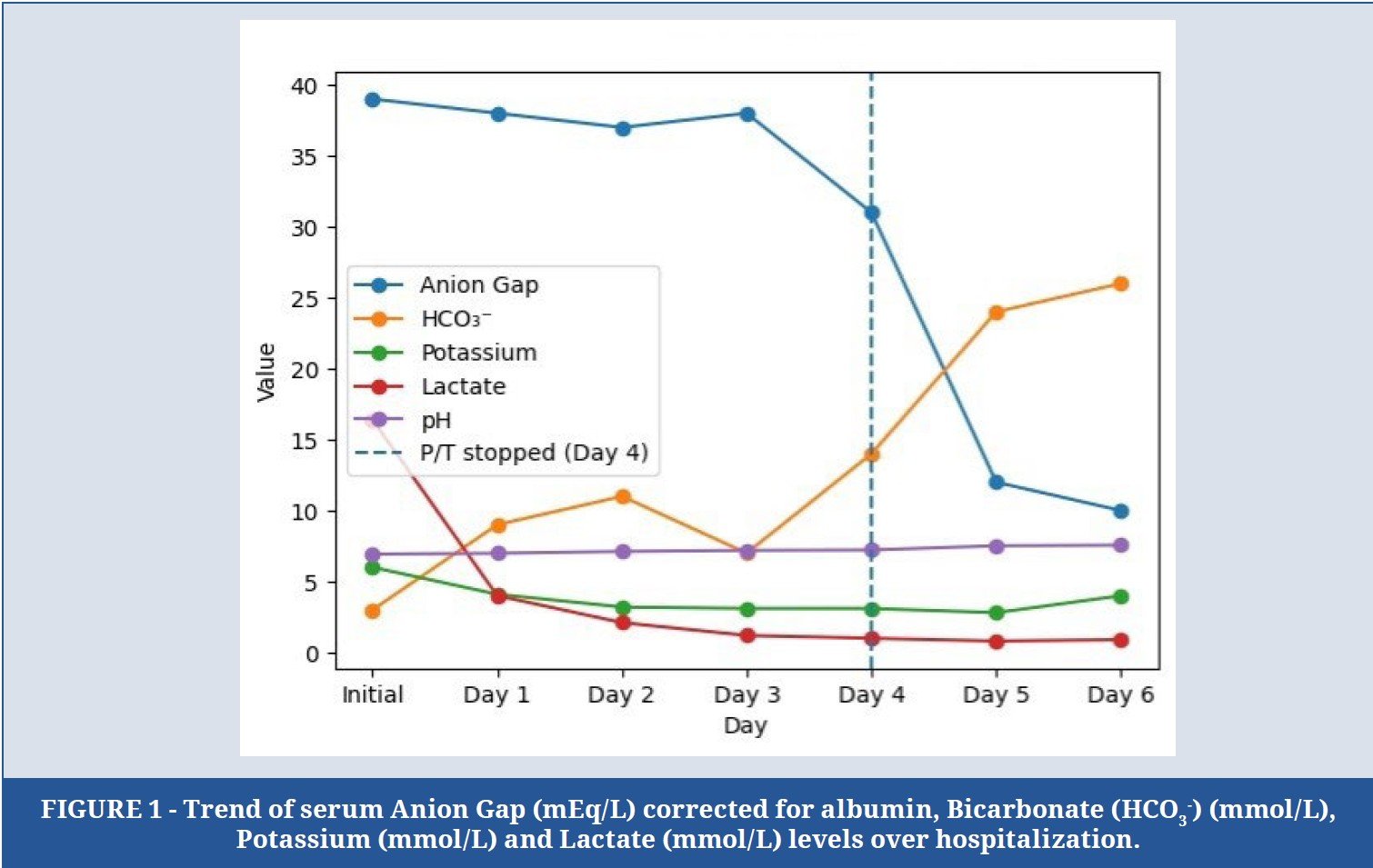
High-anion gap metabolic acidosis (HAGMA) in critically ill patients is most commonly attributed to lactic acidosis, renal failure, or toxin accumulation. Drug-induced HAGMA is uncommon and particularly difficult to establish in patients requiring renal replacement therapy. We report the case of an 86-year-old man with septic shock and severe acute kidney injury (AKI) who developed profound HAGMA requiring daily intermittent hemodialysis and continuous bicarbonate infusion. Despite normalization of lactate levels and improvement in renal function—evidenced by a decrease in serum creatinine from 8.9 to 1.8 mg/dL—persistent elevation of the anion gap and hypokalemia remained unresolved. Discontinuation of empirically initiated piperacillin–tazobactam (P/T) on day 4 resulted in resolution of the HAGMA within 48 hours, enabling cessation of dialysis. Though the improvement in the conditions of sepsis and renal function can be responsible for resolving the problem, the time factor associated with the discontinuation of piperacillin/tazobactam is suggestive of drug-related cause for the occurrence of the event. Nonetheless, the concomitant improvement in the condition of both renal dysfunction and sepsis is considered as a very important confounder in evaluating the causality for the drug.