Romain Jouffroy, Basile Gilbert, Papa Gueye, Léa Thomas, Emmanuel Bloch Laine, Patrick Ecollan, Josiane Boularan, Vincent Bounes, Benoit Vivien (Author)
Objective: The early hemodynamic optimization of septic shock patients is a cornerstone of care to hope for a better outcome, e.g., mortality decrease. However, in the prehospital setting, hemodynamic evaluation is restricted to micro and macrocirculatory clinical parameters.
This study aims to assess the relationship between micro and macrocirculatory hemodynamic parameters improvement and 30-days mortality among septic shock patients being taken care of for by a mobile intensive care unit (mICU) in the prehospital setting.
Methods: We performed a retrospective multicenter study, from January 2015 to November 2019 including septic shock patients requiring pre-hospital mICU intervention.
Results: Three hundred thirty-seven patients were analyzed. The mean age was 69 ± 15-years-old and 226 of which 67% were male patients. One hundred thirty-six patients (40%) had previous hypertension. Pulmonary infection was the main cause of septic shock (46%) and 30-days mortality reached 30%.
After propensity score analysis, for the macrocirculation: when systolic blood pressure increased by at least 30mmHg the odd ratio (OR) for 30-days mortality was 0.77 [0.65-0.84], when diastolic blood pressure increased by at least 5mmHg, the OR for 30-days mortality was 0.95 [0.88-0.99], when mean blood pressure increased by at least 30%, the OR for 30-days mortality was 0.88 [0.77-0.92] and when the heart rate decreased by at least 30 bpm, the OR for 30-days mortality was 0.62 [0.55-0.76]. For microcirculation, when the mottling score decreased by at least 2 points, the OR for 30-days mortality was 0.83 [0.75-0.91].
Conclusion: In this study, we report that prehospital improvement in micro and macrocirculatory parameters are associated with 30-days mortality rate decrease.
Introduction
Each year, 30 million people worldwide [1–3] suffer from sepsis, leading to around 11 million deaths [3] approximately one third of in-hospital deaths [4]. Sepsis mortality rate varies from 10 to 20% for sepsis and even up to 50% - 60% for septic shock, the most severe form of sepsis [5–7].
Among the factors that have made it possible to improve patient survival, we find early diagnosis, early referral to an appropriate facility, and the implementation of adequate therapies [8]. A comprehensive management strategy combining the above factors, "bundle of care", has proven its effectiveness in improving the outcome of septic shock [8–15]. The management of sepsis requires a dynamic approach constantly adapted to the severity of the patient [16,17]. For the more serious forms, the more rapid and aggressive management is the most effective [18]. Previous studies have identified that 70% of sepsis are present before arrival at the hospital, justifying the need to implement early diagnostic and therapeutic strategies from prehospital care [19].
From a pathophysiological point of view, a sufficient tissue perfusion pressure, assessed by mean arterial pressure (MAP), is necessary for antibiotic therapy to diffuse in infected tissues [18,20]. Obtaining a correct MAP requires hemodynamic optimization, including vascular filling in the first hours, even norepinephrine administration if necessary [8]. Hypertension is associated with mortality and morbidity rise [21]. In addition, hypertension is the main medical diagnosis in patients with septic shock [22]. A recommended target MAP of 65 mmHg is probably not suitable for all patients with chronic hypertension [8,23–25].
The aim of this retrospective observational study was to assess the relationship between hemodynamic parameters improvement during the pre-hospital phase of septic shock and 30-days mortality rate after hospital admission.
Patients and methods
The specificity of the French out-of-hospital emergency and care system is based on the French prehospital emergency system; the SAMU (Service d’Aide Medicale Urgente). The SAMU organization allows prehospital care equivalent to an intensive care unit by an emergency physician and a nurse. In the context of septic shock, fluid volume expansion, norepinephrine administration and antibiotic therapy can be addressed in the prehospital setting according to the recommendations [26].
We performed a retrospective, multicenter study, from January 2015 to November 2019, including patients with septic shock, treated in prehospital setting by a mICU team from Toulouse hospital, Necker hospital, Lariboisière, Pitié Salpêtrière hospital, Hôtel Dieu and Paris Fire Brigade.
The patients received care according to the recommendations of the protocols and habits of the pre-hospital and hospital teams.
The patients included in the study were those treated by a mICU team for prehospital septic shock, according to the definition of the “sepsis 3” conference in 2016 [17]. Underage patients, deprived of their liberty, under guardianship or curatorship as well as pregnant women were not included in the study.
The data analyzed included demographic data (age, weight, height), medical history, current treatments, suspected origin of sepsis, and schedules related to the pre-hospital care phase (time of call from the SAMU, time of arrival on site of the mICU team and time of arrival at the hospital), the data of the clinical examination collected at the initial stage of the prehospital setting (1st contact with the patient) and at the end of the pre-hospital phase (last values before hospital admission) - heart rate (HR), systolic blood pressure (SBP), diastolic blood pressure (DBP) and mean arterial pressure (MAP), pulsed oxygen saturation (SpO2), respiratory rate (RR), Glasgow coma scale (GCS), body core temperature, capillary blood sugar, capillary refill time, skin mottling score [27] - and lactatemia at the start of pre-hospital. Skin mottling score is a clinical score ranging from 0 to 5 associated with sepsis-outcome.
The data describing the treatments administered were also collected (vascular filling (products, volume), use of vasopressors (products, dosage), mechanical ventilation parameters if applicable, antibiotic therapy (qualitative and quantitative).
IGS II, SAPS II and SOFA scores were calculated from hospital data on day 1 [28,29]. These scores are used to predict sepsis outcome among patients admitted in ICU.
The study was approved by the ethics committee of the French Society of Anesthesia and Resuscitation on December 12, 2017 (reference number: IRB 00010254-2017-026).
Statistical analysis
The primary outcome was the 30-days mortality after hospital admission. The absolute variations (initial value in the prehospital setting – final value before hospital admission) of SBP, DBP, MAP and HR were calculated in order to evaluate the treatment effect on the macrocirculation. An increase of 30 mmHg of SBP, 5 mmHg of DBP and 30% MAP as well as a decrease of 30 beats per minute during pre-hospital care, were chosen at the beginning because of their clinical relevance representing the positive effect on hemodynamic treatment of septic shock. For microcirculation, an absolute variation in the mottling score of at least 2 points was considered to be significantly representative of a positive treatment effect of pre-hospital hemodynamic management of septic shock. The components of the hemodynamic treatment, vascular filling and/or administration of norepinephrine, were not analyzed individually but as a whole, given the absence of protocolization (possibility of using one and/or other therapies left to the discretion of the team in charge of the patient).
Univariate and multivariate analysis were performed to assess the relationship between each covariate and 30-days mortality.
The results are expressed as an absolute value with relative percentage for the qualitative variables, as a mean with standard deviation for the quantitative variables of normal distribution and as a median with interquartile range (1st quartile - 3rd quartile) for the quantitative variables of non-Gaussian distribution.
Univariate analysis comparisons were made using Student's t-test for quantitative variables of normal distribution, Wilcoxon's test for continuous variables of non-Gaussian distribution, and Chi-square test for categorical variables.
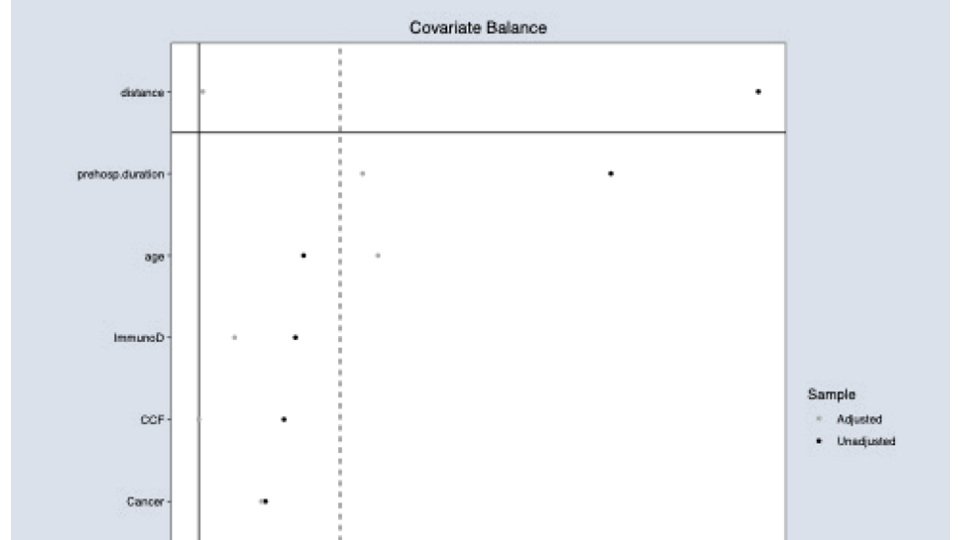
In order to reduce the potential effect of confounding covariates on the relationship between 30-days mortality and changes in SBP, DBP, MAP, HR and mottling score, a propensity score analysis was performed. The propensity score was estimated using a logistic regression based on confounding covariates on 30-days mortality: pre-hospital duration, vascular filling volume, norepinephrine infusion, initial values of SBP, DBP, MAP, HR, and skin mottling score. The “nearest neighbor matching” method was used to match patients from the logit of the propensity score [30]. A threshold of 10% of the absolute differences of the means was used to estimate the balance of covariates after matching [31]. After matching, the association between 30-days mortality and micro and macrocirculation parameters was evaluated by logistic regression.
The tests performed are two-sided with a p-value <0.05 defining the significance of the difference. Statistical analyzes were performed using R software version 3,4,2 (http://www.R-project,org; the R Foundation for Statistical Computing, Vienna, Austria).
Results
In this study, 337 patients with septic shock, according to the definition of the consensus conference “sepsis 3” of 2016, were retrospectively analyzed [17].
Global characteristics of the population are summarized in Table 1.
Suspected origin of septic shock during pre-hospital care was mainly pulmonary (n=153, 46%), digestive (n=78, 23%) and urinary (n=52, 15%).
Univariate analysis
The results of the univariate analysis are summarized in Table 2.
Multivariate analysis
After matching by propensity score, the association between 30-days mortality and micro and macrocirculation parameters were evaluated by logistic regression. The balance of covariates after matching is represented by Figures 1, 2, 3, 4 and 5 for SBP, DBP, MAP, HR and skin mottling score respectively.
* Micro-circulation
For microcirculation, when the skin mottling score decreased by at least 2 points, then the OR of death at D30 was 0.83 [0.75-0.91].
* Macro-circulation
Thus, for macrocirculation, between the start and the end of pre-hospital care:
- when the SBP increased by at least 30mmHg then the OR of death on D30 was 0.77 [0.65-0.84],
- when the DBP increased by at least 5mmHg then the OR of death on D30 was 0.95 [0.88-0.99],
- when the MAP increased by at least 30% then the OR of death on D30 was 0.88 [0.77-0.92],
- when the HR decreased by at least 30 beats per minute then the OR of death at D30 was 0.62 [0.55-0.76].
Discussion
In this study, we observed that the improvement in the micro and macrocirculatory hemodynamic parameters of patients with septic shock treated in pre-hospital setting by a mICU team is associated with a 30-days mortality decrease.
Indeed, data from previous studies had reported that circulatory, clinical or biological failures are associated with worsening of the patient [32–36].
From a pathophysiological point of view, the inflammation caused by sepsis is associated with vasodilation and vascular permeability as reflected by micro and macrocirculatory parameters [37].
In prehospital setting, only clinical parameters are available to assess the micro and macrocirculatory. For macro-circulation, MAP being considered to reflect tissue perfusion, the importance of maintaining or restoring it to reduce the occurrence or worsening of organ failures appears essential. Since invasive monitoring is rarely possible in pre-hospital, a non-invasive MAP measurement is the only one that can be used in pre-hospital. For microcirculation, the advisability of considering clinical parameters as a therapeutic target has already been reported for skin mottling score and capillary refill time [38].
For optimal management, the "sepsis 3" conference of 2016 [17], recommends a fluid volume expansion initiated in the first hours, followed by the administration of norepinephrine even if the MAP remains below 65 mmHg [8,17]. However, recent studies show the benefits of using norepinephrine earlier in order to reduce the time to target MAP and improve survival [39–41].
A MAP target of 65 mmHg for all patients without taking into account their personal history does not appear physiologically logical. Indeed, among patients suffering from, pathophysiological changes aim to allow adaptation to the higher blood pressure regimen [42–44]. Previous studies have reported the benefit of a higher blood pressure target in hypertensive population without altering heart function [45–47], microcirculation [48] and kidney function [23]. Thus, Lee et al. reported that a MAP target between 75 and 85 mmHg is associated with increased survival in hypertensive patients with septic shock [49]. In addition, it has been reported that the shorter the duration of the period of low blood pressure, e.g., hypoperfusion, the better is the survival [50].
However, this study has limitations. First, this is a retrospective study. Second, the study was conducted in an adult population exclusively; therefore, the results cannot be extrapolated directly to a pediatric population. Third, the external validity is low due to the specificity of the French pre-hospital emergency medical system. Fourth, the study population is represented by septic shock, therefore the results cannot be extrapolated to non-septic shock patients, i.e., sepsis. Nevertheless, the micro and macrocirculatory hemodynamic parameters reported in this study are simple and accessible since the prehospital setting to assess the severity and the treatment effect of septic shock cared for by a mICU team. Further studies are needed to confirm whether these parameters could be used to increase prehospital management and triage of septic shock.
Conclusion
In this study, we report an association between survival and micro and macrocirculatory hemodynamic parameters improvement among septic shock patients cared for by a mICU team in the prehospital setting. An early intervention, from the prehospital setting, personalized mean arterial pressure management appears desirable among hypertensive patients.
Author contributions
All authors contributed equally and validated the final version of record.
Conflicts Of Interest
The Author(s) declare(s) that there is no conflict of interest.
Funding
This research received no specific grant from any funding agency in the public, commercial, or not-for-profit sectors.
Registration
No registration applicable
Data availability statement
The data that support the findings of this study are available from the corresponding author upon reasonable request.
Ethical approval
The study was approved by the ethics committee of the French Society of Anesthesia and Resuscitation on December 12, 2017 (reference number: IRB 00010254-2017-026).
References
1. Fleischmann C, Scherag A, Adhikari NKJ, Hartog CS, Tsaganos T, Schlattmann P, et al. Assessment of Global Incidence and Mortality of Hospital-treated Sepsis. Current Estimates and Limitations. Am J Respir Crit Care Med. 2016;193(3):259–72. https://doi.org/10.1164/rccm.201504-0781OC.
2. Gaieski DF, Edwards JM, Kallan MJ, Carr BG. Benchmarking the Incidence and Mortality of Severe Sepsis in the United States*. Crit Care Med. 2013;41(5):1167–74. https://doi.org/10.1097/CCM.0b013e31827c09f8.
3. Rudd KE, Johnson SC, Agesa KM, Shackelford KA, Tsoi D, Kievlan DR, et al. Global, regional, and national sepsis incidence and mortality, 1990–2017: analysis for the Global Burden of Disease Study. Lancet. 2020 Jan 18;395(10219):200–11. https://doi.org/10.1016/S0140-6736(19)32989-7.
4. Liu V, Escobar GJ, Greene JD, Soule J, Whippy A, Angus DC, et al. Hospital Deaths in Patients With Sepsis From 2 Independent Cohorts. JAMA. 2014 Jul 2;312(1):90–2. https://doi.org/10.1001/jama.2014.5804.
5. Busani S, Damiani E, Cavazzuti I, Donati A, Girardis M. Intravenous immunoglobulin in septic shock: review of the mechanisms of action and meta-analysis of the clinical effectiveness. Minerva anestesiol. 2016;82(5):559–72.
6. Luhr R, Cao Y, Söderquist B, Cajander S. Trends in sepsis mortality over time in randomised sepsis trials: a systematic literature review and meta-analysis of mortality in the control arm, 2002–2016. Crit Care. 2019 Jul 3;23(1):241. https://doi.org/10.1186/s13054-019-2528-0.
7. Sakr Y, Elia C, Mascia L, Barberis B, Cardellino S, Livigni S, et al. Epidemiology and outcome of sepsis syndromes in Italian ICUs: a muticentre, observational cohort study in the region of Piedmont. Minerva Anestesiol. 2013 Sep;79(9):993–1002.
8. Singer M, Deutschman CS, Seymour CW, Shankar-Hari M, Annane D, Bauer M, et al. The Third International Consensus Definitions for Sepsis and Septic Shock (Sepsis-3). JAMA. 2016 Feb 23;315(8):801–10. https://doi.org/10.1001/jama.2016.0287.
9. Jouffroy R, Gilbert B, Tourtier JP, Bloch-Laine E, Ecollan P, Bounes V, et al. Impact of Prehospital Antibiotic Therapy on Septic Shock Mortality. Prehosp Emerg Care. 2021 May 4;25(3):317–24. https://doi.org/10.1080/10903127.2020.1763532.
10. Nauclér P, Huttner A, van Werkhoven CH, Singer M, Tattevin P, Einav S, et al. Impact of time to antibiotic therapy on clinical outcome in patients with bacterial infections in the emergency department: implications for antimicrobial stewardship. Clin Microbiol Infect. 2021 Feb 1;27(2):175–81. https://doi.org/10.1016/j.cmi.2020.02.032.
11. Peltan ID, Brown SM, Bledsoe JR, Sorensen J, Samore MH, Allen TL, et al. ED Door-to-Antibiotic Time and Long-term Mortality in Sepsis. CHEST. 2019 May 1;155(5):938–46. https://doi.org/10.1016/j.chest.2019.02.008.
12. Seok H, Song J, Jeon JH, Choi HK, Choi WS, Moon S, et al. Timing of antibiotics in septic patients: a prospective cohort study. Clin Microbiol Infect. 2020 Nov 1;26(11):1495–500. https://doi.org/10.1016/j.cmi.2020.01.037.
13. Seymour CW, Gesten F, Prescott HC, Friedrich ME, Iwashyna TJ, Phillips GS, et al. Time to Treatment and Mortality during Mandated Emergency Care for Sepsis. N Engl J Med. 376(23):2235–44. https://doi.org/10.1056/NEJMoa1703058.
14. Singer M. Antibiotics for Sepsis: Does Each Hour Really Count, or Is It Incestuous Amplification? Am J Respir Crit Care Med. 2017 Oct 1;196(7):800–2. https://doi.org/10.1164/rccm.201703-0621ed.
15. Sterling SA, Miller WR, Pryor J, Puskarich MA, Jones AE. The Impact of Timing of Antibiotics on Outcomes in Severe Sepsis and Septic Shock: A Systematic Review and Meta-Analysis*. Crit Care Med. 2015;43(9):1907–15. https://doi.org/10.1097/CCM.0000000000001142.
16. Leisman DE, Doerfler ME, Ward MF, Masick KD, Wie BJ, Gribben JL, et al. Survival Benefit and Cost Savings From Compliance With a Simplified 3-Hour Sepsis Bundle in a Series of Prospective, Multisite, Observational Cohorts. Crit Care Med. 2017;45(3):395–406. https://doi.org/10.1097/ccm.0000000000002184.
17. Rhodes A, Evans LE, Alhazzani W, Levy MM, Antonelli M, Ferrer R, et al. Surviving Sepsis Campaign: International Guidelines for Management of Sepsis and Septic Shock: 2016. Intensive Care Med. 2017 Mar 1;43(3):304–77. https://doi.org/10.1007/s00134-017-4683-6.
18. Jouffroy R, Vivien B. Implementation of earlier antibiotic administration in patients with severe sepsis and septic shock in Japan: antibiotic action needs time and tissue perfusion to reach target. Crit Care. 2020 Jan 14;24(1):17. https://doi.org/10.1186/s13054-020-2727-8.
19. The EPISEPSIS Study Group. EPISEPSIS: a reappraisal of the epidemiology and outcome of severe sepsis in French intensive care units. Intensive Care Med. 2004 Apr 1;30(4):580–8. https://doi.org/10.1007/s00134-003-2121-4.
20. Kumar A, Roberts D, Wood KE, Light B, Parrillo JE, Sharma S, et al. Duration of hypotension before initiation of effective antimicrobial therapy is the critical determinant of survival in human septic shock*. Crit Care Med [Internet]. 2006;34(6):1589–96. https://doi.org/10.1097/01.CCM.0000217961.75225.E9.
21. Kung HC, Xu J. Hypertension-related Mortality in the United States, 2000-2013. NCHS Data Brief. 2015 Mar;(193):1–8.
22. Unal A, Kostek O, Takir M, Caklili O, Uzunlulu M, Oguz A. Prognosis of patients in a medical intensive care unit. North Clin Istanb. 2015 Dec 31;2(3):189–95. https://doi.org/10.14744/nci.2015.79188.
23. Asfar P, Meziani F, Hamel J-F, Grelon F, Megarbane B, Anguel N, et al. High versus Low Blood-Pressure Target in Patients with Septic Shock. N Engl J Med. 370(17):1583–93. https://doi.org/10.1056/NEJMoa1312173.
24. Hylands M, Moller MH, Asfar P, Toma A, Frenette AJ, Beaudoin N, et al. A systematic review of vasopressor blood pressure targets in critically ill adults with hypotension. Can J Anaesth. 2017 Jul;64(7):703–15. https://doi.org/10.1007/s12630-017-0877-1.
25. Lamontagne F, Meade MO, Hébert PC, Asfar P, Lauzier F, Seely AJE, et al. Higher versus lower blood pressure targets for vasopressor therapy in shock: a multicentre pilot randomized controlled trial. Intensive Care Med. 2016 Apr 1;42(4):542–50. https://doi.org/10.1007/s00134-016-4237-3.
26. Adnet F, Lapostolle F. International EMS Systems: France. Resuscitation. 2004 Oct 1;63(1):7–9. https://doi.org/10.1016/j.resuscitation.2004.04.001.
27. Le Borgne P, Kam C, Bilbault P. Marbrures: expression clinique de la dysfonction microcirculatoire dans le choc septique. Ann Fr Med Urgence. 2016 May;6(3):212–3. https://doi.org/10.1007/s13341-016-0637-9.
28. Le Gall JR, Lemeshow S, Saulnier F. A new Simplified Acute Physiology Score (SAPS II) based on a European/North American multicenter study. JAMA. 1993 Dec 22;270(24):2957–63. https://doi.org/10.1001/jama.270.24.2957. Erratum in: JAMA 1994 May 4;271(17):1321. PMID: 8254858.
29. Vincent JL, Moreno R, Takala J, Willatts S, De Mendonça A, Bruining H, et al. The SOFA (Sepsis-related Organ Failure Assessment) score to describe organ dysfunction/failure. Intensive Care Med. 1996 Jul 1;22(7):707–10. https://doi.org/10.1007/BF01709751.
30. Austin PC. An Introduction to Propensity Score Methods for Reducing the Effects of Confounding in Observational Studies. Multivar Behav Res. 2011 May 31;46(3):399–424. https://doi.org/10.1080/00273171.2011.568786.
31. Austin PC. Balance diagnostics for comparing the distribution of baseline covariates between treatment groups in propensity-score matched samples. Stat Med. 2009 Nov 10;28(25):3083–107. https://doi.org/10.1002/sim.3697.
32. Ait-Oufella H, Bige N, Boelle PY, Pichereau C, Alves M, Bertinchamp R, et al. Capillary refill time exploration during septic shock. Intensive Care Med. 2014 Jul 1;40(7):958–64. https://doi.org/10.1007/s00134-014-3326-4.
33. Ait-Oufella H, Lemoinne S, Boelle PY, Galbois A, Baudel JL, Lemant J, et al. Mottling score predicts survival in septic shock. Intensive Care Med. 2011 May 1;37(5):801–7. https://doi.org/10.1007/s00134-011-2163-y.
34. Charlton M, Sims M, Coats T, Thompson JP. The microcirculation and its measurement in sepsis. J. Intensive Care Soc. 2017 Aug 1;18(3):221–7. https://doi.org/10.1177/1751143716678638.
35. De Backer D, Creteur J, Preiser JC, Dubois MJ, Vincent JL. Microvascular Blood Flow Is Altered in Patients with Sepsis. Am J Respir Crit Care Med. 2002 Jul 1;166(1):98–104. https://doi.org/10.1164/rccm.200109-016oc.
36. Sakr Y, Dubois MJ, De Backer D, Creteur J, Vincent JL. Persistent microcirculatory alterations are associated with organ failure and death in patients with septic shock*. Crit Care Med. 2004 Sep;32(9):1825–31. https://doi.org/10.1097/01.ccm.0000138558.16257.3f.
37. Angus DC, van der Poll T. Severe Sepsis and Septic Shock. N Engl J Med. 2013;369(9):840–51. https://doi.org/10.1056/NEJMra1208623. Erratum in: N Engl J Med. 2013 Nov 21;369(21):2069..
38. Jouffroy R, Saade A, Tourtier JP, Gueye P, Bloch-Laine E, Ecollan P, et al. Skin mottling score and capillary refill time to assess mortality of septic shock since pre-hospital setting. Am J Emerg Med. 2019 Apr 1;37(4):664–71. https://doi.org/10.1016/j.ajem.2018.07.010.
39. Bai X, Yu W, Ji W, Lin Z, Tan S, Duan K, et al. Early versus delayed administration of norepinephrine in patients with septic shock. Crit Care. 2014 Oct 3;18(5):532. https://doi.org/10.1186/s13054-014-0532-y.
40. Hamzaoui O, Georger JF, Monnet X, Ksouri H, Maizel J, Richard C, et al. Early administration of norepinephrine increases cardiac preload and cardiac output in septic patients with life-threatening hypotension. Crit Care. 2010 Jul 29;14(4):R142. https://doi.org/10.1186/cc9207.
41. Morimatsu H, Singh K, Uchino S, Bellomo R, Hart G. Early and exclusive use of norepinephrine in septic shock. Resuscitation. 2004 Aug 1;62(2):249–54. https://doi.org/10.1016/j.resuscitation.2004.03.016.
42. Dünser MW, Takala J, Ulmer H, Mayr VD, Luckner G, Jochberger S, et al. Arterial blood pressure during early sepsis and outcome. Intensive Care Med. 2009 Jul 1;35(7):1225–33. https://doi.org/10.1007/s00134-009-1427-2.
43. Immink RV, van den Born BJH, van Montfrans GA, Koopmans RP, Karemaker JM, van Lieshout JJ. Impaired Cerebral Autoregulation in Patients With Malignant Hypertension. Circulation. 2004 Oct 12;110(15):2241–5. https://doi.org/10.1161/01.CIR.0000144472.08647.40.
44. Strandgaard S, Olesen J, Skinhøj E, Lassen NA. Autoregulation of Brain Circulation in Severe Arterial Hypertension. BMJ. 1973 Mar 3;1(5852):507. https://doi.org/10.1136/bmj.1.5852.507.
45. Bourgoin A, Leone M, Delmas A, Garnier F, Albanèse J, Martin C. Increasing mean arterial pressure in patients with septic shock: Effects on oxygen variables and renal function*. Crit Care Med. 2005;33(4):780–6. https://doi.org/10.1097/01.ccm.0000157788.20591.23.
46. LeDoux D, Astiz ME, Carpati CM, Rackow EC. Effects of perfusion pressure on tissue perfusion in septic shock. Crit Care Med. 2000;28(8):2729–32. https://doi.org/10.1097/00003246-200008000-00007.
47. Xu JY, Ma SQ, Pan C, He HL, Cai SX, Hu SL, et al. A high mean arterial pressure target is associated with improved microcirculation in septic shock patients with previous hypertension: a prospective open label study. Crit Care. 2015 Dec 1;19(1):130. https://doi.org/10.1186/s13054-015-0866-0.
48. Thooft A, Favory R, Salgado DR, Taccone FS, Donadello K, De Backer D, et al. Effects of changes in arterial pressure on organ perfusion during septic shock. Crit Care. 2011 Sep 21;15(5):R222. https://doi.org/10.1186/cc10462.
49. Lee GT, Hwang SY, Jo IJ, Kim TR, Yoon H, Park JH, et al. Associations between mean arterial pressure and 28-day mortality according to the presence of hypertension or previous blood pressure level in critically ill sepsis patients. J Thorac Dis. 2019 May 31;(5):1980–1988. https://doi.org/10.21037/jtd.2019.04.108.
50. The ProCESS Investigators. A Randomized Trial of Protocol-Based Care for Early Septic Shock. N Engl J Med. 370(18):1683–93. https://doi.org/10.1056/NEJMoa1401602.